Politics
A Complete Analysis
October 25, 2024
The word democracy stems from the Greek word "dēmos", meaning "the people", and the suffix "-kratia", meaning "power". The origins of the word itself ask the most salient questions of the democratic process: which members of society are included in the "dēmos", and how much power should they be given? In the many millennia since the foundations of democracy, scholars and activists alike have debated these contentious but crucial questions.
The modern consensus on the first typically rests upon all naturalized residents of a democratic nation, regardless of ethnicity or economic status, being extended the right to vote for their leaders and policies. Modern scholarship thus squarely focuses on the question of lending power to the people, particularly how much influence the citizenry should have over the politics of the nation, and what checks and balances should be placed upon this influence so as to curtail a "tyranny of the majority".
These examinations of democracy, however, often ignore a key factor, one which poses a threat to the very basis of democracy: what factual, unbiased knowledge of policy and politics do everyday voters carry? Moreover, can the aforementioned balance of powers protect democracy from the demagoguery that this inevitably causes?
In this paper, I argue that there is such a thing as too much democracy. Without proper care given to civic education and the unbiased dissemination of policy instruction to a nation's constituents, the body politic becomes increasingly misinformed and polarized. This regression to the extremes poses an existential threat to the security of the democratic process in both direct and representative democracies.
Civic Education and Political Violence
Firstly, backsliding civic education makes a body politic more prone to tribalistic tendencies. This makes a democratic society increasingly vulnerable to instability as polarization increases and leads to populism and demagoguery.
The inverse relationship between an individual knowing their obligations to the republic and political violence is well known in psychology. In a pivotal study of data from the World Values Survey, a theoretical model suggested that educated individuals have a comparative advantage under democracy in translating their (better) judgment of public policies into action—an advantage that was also reflected in more totalitarian regimes.
Accordingly, a less educated citizen of a democracy is thus left less represented by the political process, particularly if they are not as knowledgeable in politics. Unable to address their problems as efficiently as those more civically-minded and educated, the less educated citizen is estranged and alienated from the former.
Plato's Republic and Demagoguery
Plato's Republic and Greek history both provide notable evidence for the increase in demagoguery as factionalism becomes increasingly prominent in polarized societies. In Book six of the Republic, Socrates analogizes democracy to a ship, arguing that the shipowner, large and strong, but without adequate knowledge of ships, is nonetheless expected to elect the true leader amongst arguing sailors who have "never learnt that skill", while "the true captain will be called a real stargazer, a babbler, and a good-for-nothing."
Rather than electing a leader based on true skill, the deserved and experienced captain is skipped over for the more confident and convincing commander who appeals to the prejudices of the elector and their faction of supporters rather than rationality.
The January 6th Example
Ancient examples of demagoguery and populism rhyme with similar issues faced in the modern era. In 2021, the United States of America saw an attempted coup as far-right coteries from various states attacked the U.S. Capitol building. Despite being largely unorganized, these groups were united in the belief that the Presidential Candidate they supported, Donald Trump, had wrongly been denied the Presidency, despite there being no evidence to verify that claim.
The lack of humanities and civics education amongst the rioters also played a key role in causing the attempted coup. Education in these fields often helps individuals adjust to different perspectives, a necessity in an increasingly diverse society.
Media Polarization and Tyranny of the Majority
Secondly, bias in mainstream media serves to further divide the body politic among partisan lines. This has the added effect of distancing people from their government and producing a "tyranny of the majority", leading to the oppression of minority groups.
Biased media feeds political biases, factionalizing society through ideological division. In a study from the University of Rochester, researchers found that news stories about domestic politics and social issues are becoming increasingly polarized along ideological lines, and people are used to only listening to things they like to hear.
Conclusion
As Alexis de Tocqueville states in Democracy in America, "the majority [in a democracy] possesses a power which is physical and moral at the same time; it acts upon the will as well as upon the actions of men, and it represses not only all contest, but all controversy."
The philosopher and educationist John Dewey, writing of an industrial America, states that "democracy has to be born anew every generation, and education is its midwife." This is particularly true of civic education and proper instruction in policy, without which voters are reduced to making groundless and misinformed decisions about a nation's highest offices.
About the Author
Contributing Writer
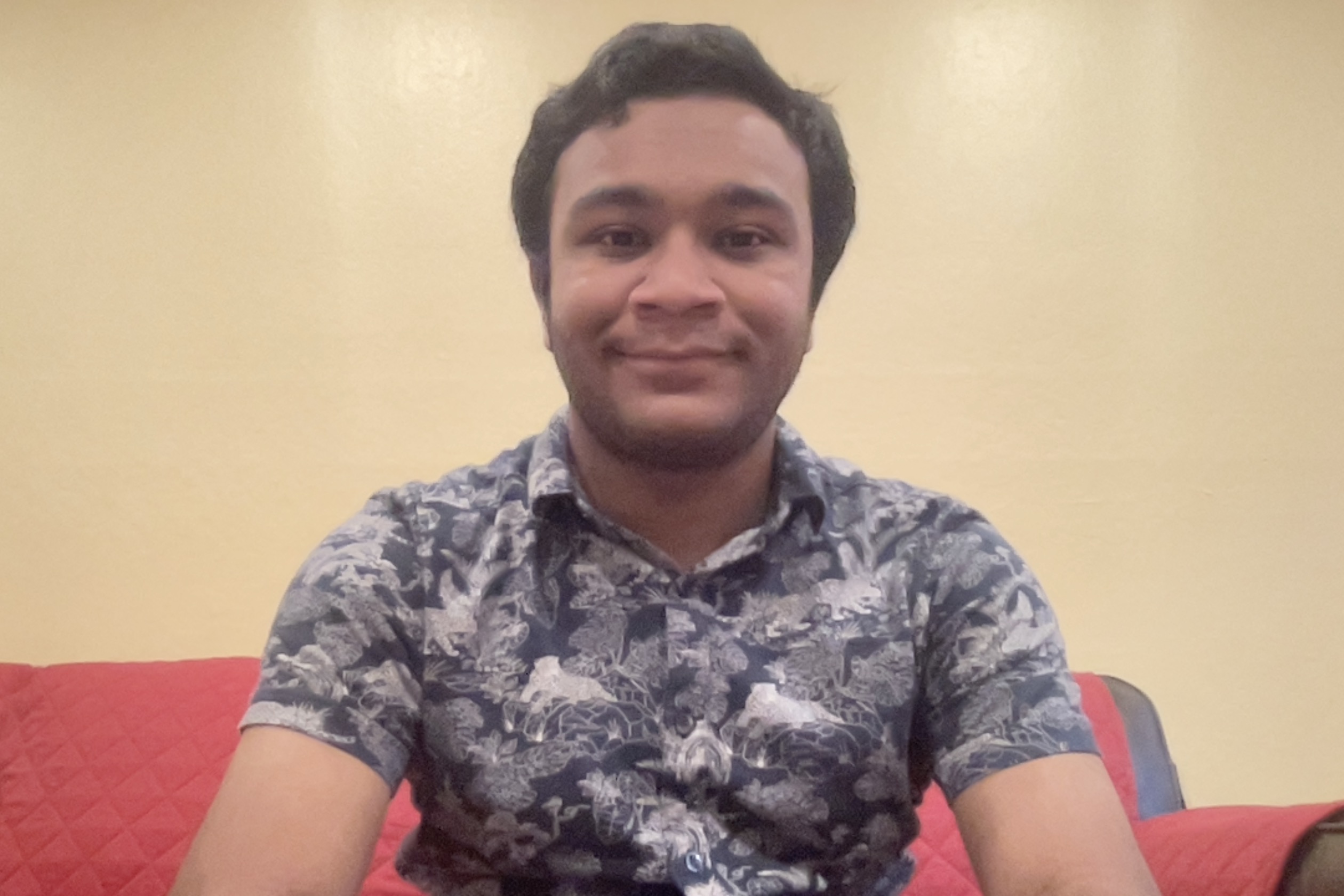
Ratul Chakraborty is a junior at Foothill High School in Pleasanton, California. He is the current president and founder of California High School Democrats, Pleasanton Chapter. He also serves in leadership positions at various clubs in his high school, including the quiz bowl, research, and math clubs.
2
Articles
Leave a Comment
Share your thoughts on this article. Your comment will be reviewed before publishing.